

5 Instant Coffee Myths — Debunked
Low quality. Full of caffeine. Artificial flavours. Can't taste the difference. The category has been carrying these myths for decades. Here is what is actually true.
Instant coffee has earned its bad reputation. For most of the last century, it deserved it — commodity Robusta beans, industrial processing, flavour-stripping heat. But the category has changed, and the old myths have not kept up. Here are the five we hear most often, and what is actually true.
Myth 1: Instant coffee is low quality
This was true for most mass-market instant coffees, but it is a statement about sourcing decisions, not about the format. Instant coffee is just brewed coffee that has been dehydrated. The quality of the final granule is entirely determined by the quality of the coffee that went into the brewer.
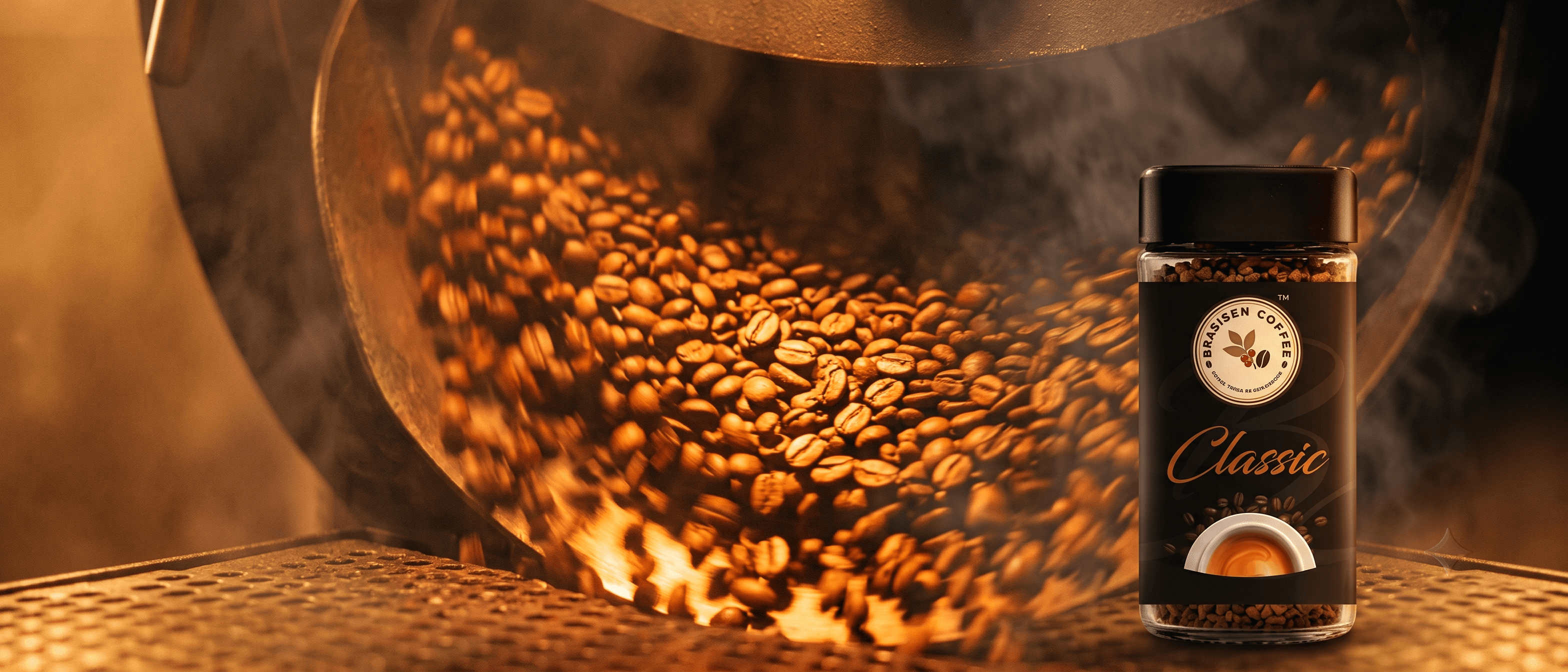
Single-origin Arabica beans from Coorg and Araku, slow-roasted in small batches, then spray-dried at low temperature to preserve aromatics — that is a high-quality instant coffee. The process does not change the category; the sourcing does. Bereiken's beans are the same grade as what specialty cafés use for espresso. The format is different. The quality is not.
Myth 2: Instant coffee has more caffeine
By volume of coffee, instant actually has less caffeine than filter or espresso. A standard serving of instant coffee runs 60–90mg of caffeine. A double espresso is 120–140mg. Filter coffee, depending on brew ratio, can hit 150–200mg per cup.
The myth likely comes from the fact that people use instant coffee for a quick energy boost — so the association with caffeine is strong — but the numbers tell a different story.
60–90mg
Caffeine in a standard instant coffee serving — less than a double espresso
Myth 3: The flavours are artificial
For Bereiken Caramel, Hazelnut, Mocha, and Vanilla — the flavours come from natural extracts, not synthetic flavouring compounds. The caramel note is derived from caramelised sugar extract. The hazelnut comes from pressed hazelnut oil. We do not use flavour chemicals to simulate what a natural ingredient does better.
This is more expensive than synthetic alternatives. It is also the only way to get a flavour that integrates with the coffee rather than sitting on top of it. Artificial vanilla smells like vanilla. Natural vanilla extract tastes like it belongs.
Myth 4: Instant coffee is bad for you
Coffee is coffee. The antioxidants, polyphenols, and chlorogenic acids present in fresh-roasted beans survive the spray-drying process well. Studies comparing the nutritional profile of instant and fresh-brewed coffee show minimal differences — instant retains approximately 90% of the antioxidant activity of freshly brewed.
The health profile of your cup has far more to do with what you add to it (sugar, full-fat milk, flavoured syrups) than whether it started as granules or whole beans.
Myth 5: You cannot tell the difference
You absolutely can. And you should be able to. A cup of Bereiken Classic made with 200ml of 90°C water — no milk, no sugar — tastes like coffee. The origin notes of Coorg Arabica are present: a mild brightness, a round body, a clean finish with no harsh aftertaste.
Compare that to a cup of any mass-market instant coffee and the difference is not subtle. The myth that instant coffee all tastes the same is a myth born from a market where it mostly did. Bereiken exists because that does not have to be true.
Instant coffee is just brewed coffee, dehydrated. Every quality decision happens before the spray-dryer. We made different decisions.
Judge for yourself
Try Classic black — 2 tsp, 200ml at 90°C, no milk. That is the actual flavour of Coorg Arabica in your hand.