

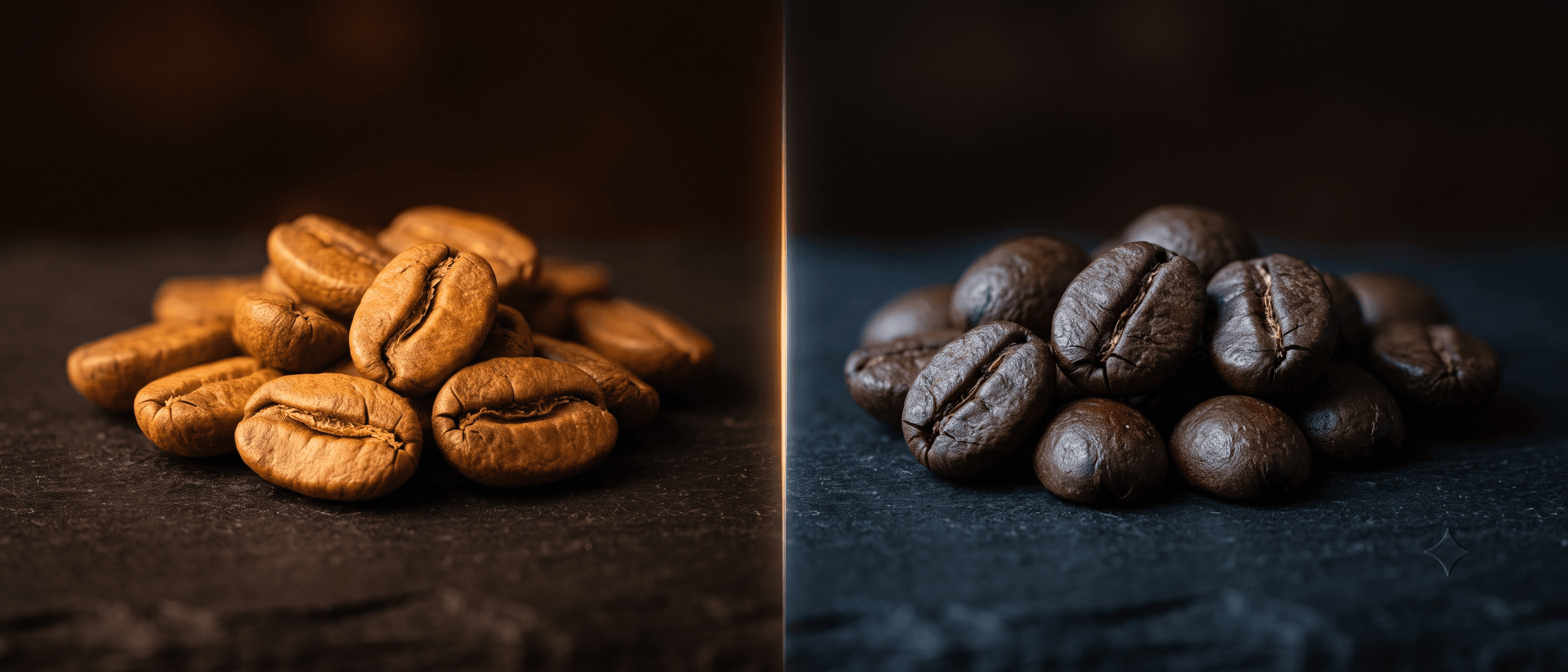
Arabica vs Robusta: The Real Difference
Everyone says Arabica is better. Most people cannot tell you why. We break down the science — two different species, different altitudes, different tastes — and what it means for your cup.
You have seen it on every premium coffee label. 100% Arabica. But most people cannot tell you what that actually means beyond a vague sense that it is supposed to be better. The coffee industry has spent decades using it as marketing shorthand without explaining the science. Here is what is actually going on.
Two Different Plants
Arabica (Coffea arabica) and Robusta (Coffea canephora) are not varieties of the same plant — they are separate species entirely. Arabica originated in the highlands of Ethiopia. Robusta is from West and Central Africa. They look different, grow differently, and taste completely different.
Arabica prefers altitude — ideally 1,000 to 2,000 metres above sea level, with consistent temperatures between 15°C and 24°C, and significant rainfall. It is a delicate plant. The cool altitude slows the maturation of the coffee cherry, giving the bean more time to develop complex sugars and aromatic compounds. This slow growth is the source of its flavour complexity.
Robusta lives up to its name. It thrives at lower altitudes, tolerates heat and disease far better, and produces larger yields. The tradeoff is in the cup.
What Each Tastes Like
- Arabica: fruity, bright, mildly sweet, with wine-like complexity. Flavour notes range from floral and citrus to stone fruit and dark chocolate depending on origin and roast.
- Robusta: earthy, harsh, strongly bitter, with a rubbery or woody aftertaste. Often described as tasting like burnt rubber at lower roast levels.
- Robusta is used in cheaper instant coffees and many espresso blends to add body and reduce cost — not for flavour.
Arabica has around 1% caffeine. Robusta has around 2%. But caffeine is bitter — so Robusta tastes harsher partly because of what makes it 'stronger'.
The Caffeine Myth
A common belief is that Robusta is stronger because it has more caffeine. In raw terms, yes — Robusta has roughly twice the caffeine by weight. But caffeine is bitter. Part of what makes Robusta taste harsh is that very caffeine content. Arabica's lower caffeine makes it smoother — not weaker in any meaningful sense, just more pleasant to drink.
More importantly, how much caffeine you get per cup depends on extraction, not bean variety. A double shot of Arabica espresso and a cup of instant Robusta have very similar caffeine numbers. The variety is not the determining factor.
Why Most Instant Coffee Is Robusta
Spray-drying coffee into granules requires a highly soluble, robust bean that can survive the industrial process. Robusta is cheaper to grow, higher yield, and dissolves more readily. For decades this made it the default for instant coffee — leading to the category-wide reputation for poor taste.
The assumption that instant coffee must be inferior became a self-fulfilling prophecy. Brands used inferior beans because the expectation was already low. Breaking that cycle requires using the right bean from the start.
Why Bereiken Is 100% Arabica
We source single-origin Arabica from Coorg and Araku — two of India's finest growing regions. The beans are slow-roasted in small batches in Surat, then spray-dried at low temperatures to preserve the volatile aroma compounds that give Arabica its character.
The result is an instant coffee that tastes like the Arabica it came from — not a compromise with a commodity grain. When you open a Bereiken jar, what you smell is the bean. What you taste is the origin.
Taste the difference
If you have only ever had Robusta instant, one cup of Bereiken Classic will change your frame of reference permanently.